




Next.js Learning Platform
Marketplace, student, instructor, studio, and admin workflows from the Next.js app.
A full Next.js App Router e-learning product built around the HadiLearn brand. It covers public marketplace discovery, commerce intent, fake checkout/enrollment, student dashboards, course and lesson players, certificate eligibility, student settings, instructor dashboards, course forms, curriculum mutation flows, quiz planning, creator studio pages, articles, reels, collaborators, admin dashboards, user/course/category/order/review moderation, analytics scaffolds, mock login/registration, role switching, protected access helpers, and branded feedback pages.
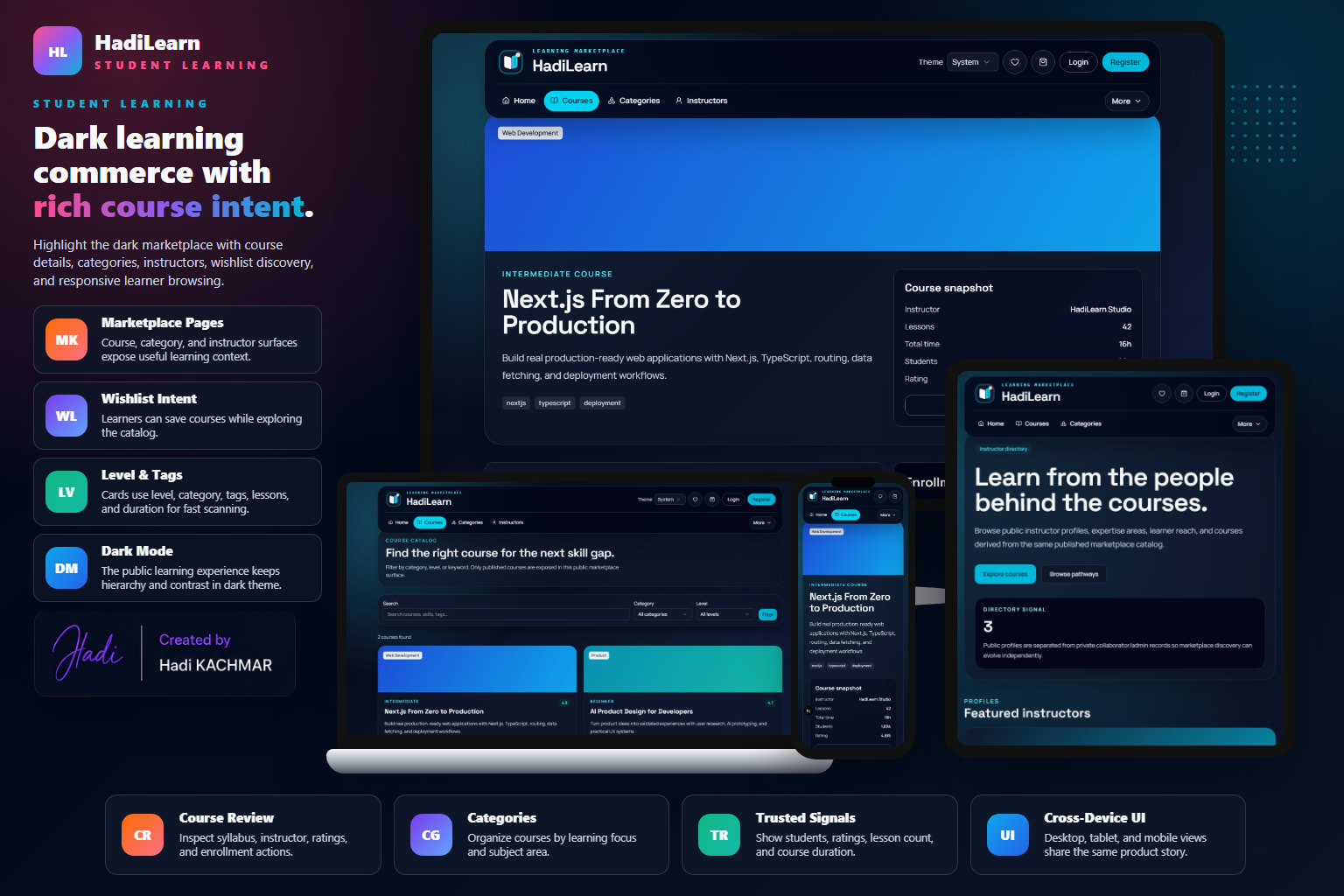
- Public marketplace routes cover homepage, searchable course catalog, course details, category directory, category landing pages, instructor directory, and instructor profiles.
- Commerce state includes local wishlist, local cart, student-only fake checkout, checkout success, and cookie-backed fake enrollment.
- Student routes cover dashboard, my learning, certificates, settings, course player, lesson player, and mock completion progress.
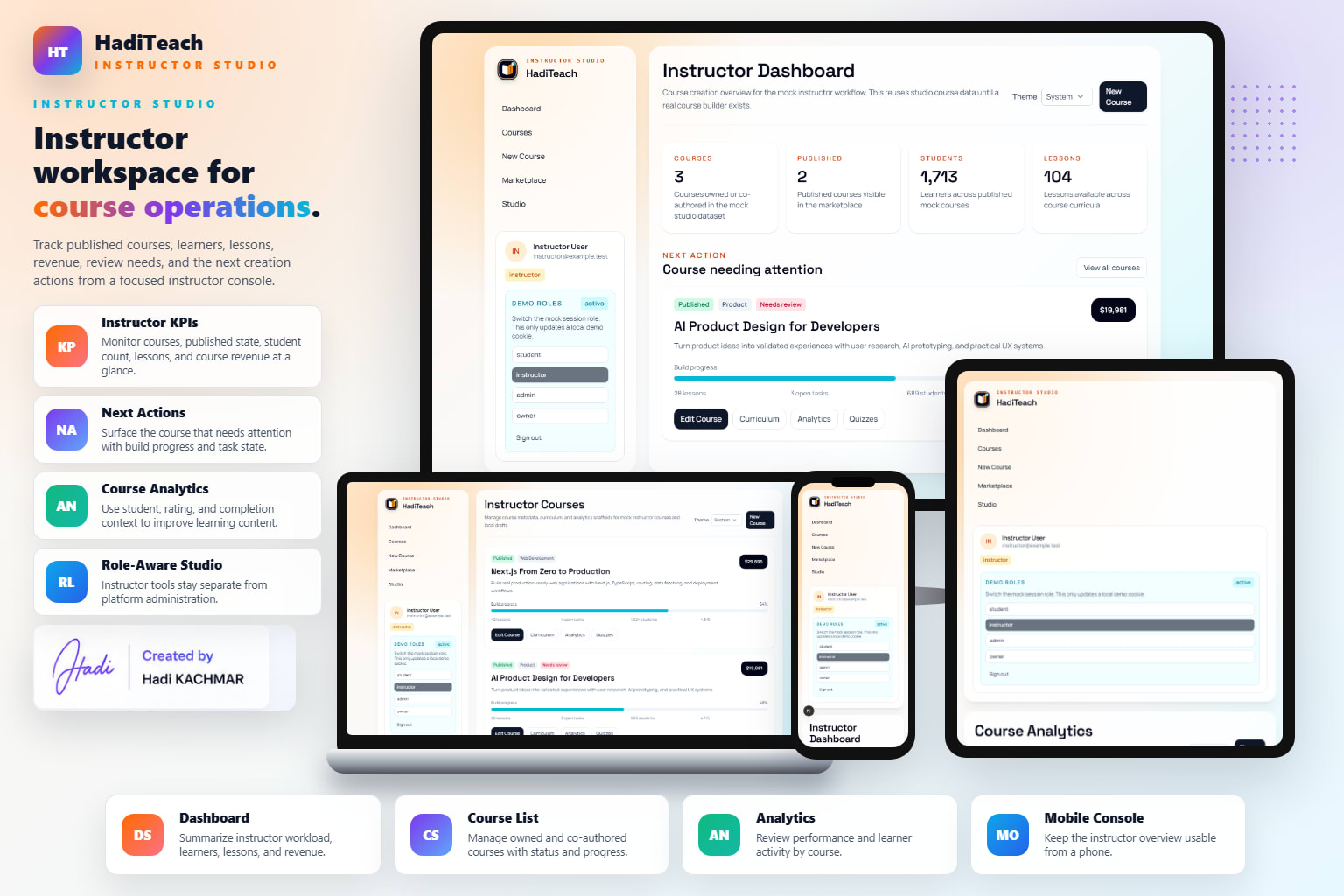
- Instructor routes cover dashboard, course list, validated new/edit course forms, curriculum builder, quiz planner, and course analytics.
- Studio routes cover creator dashboard, reels, articles, article draft form, and collaborator management.
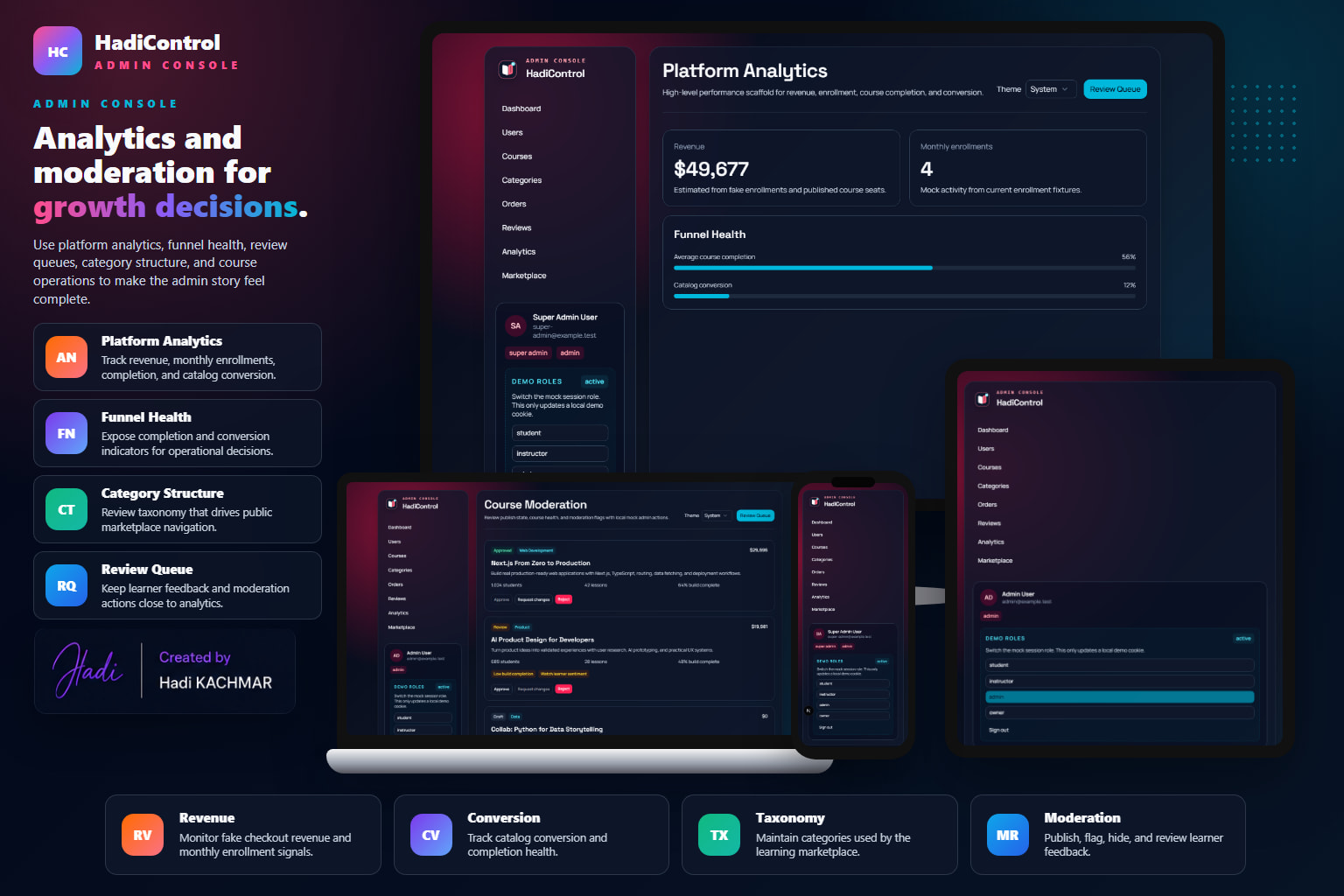
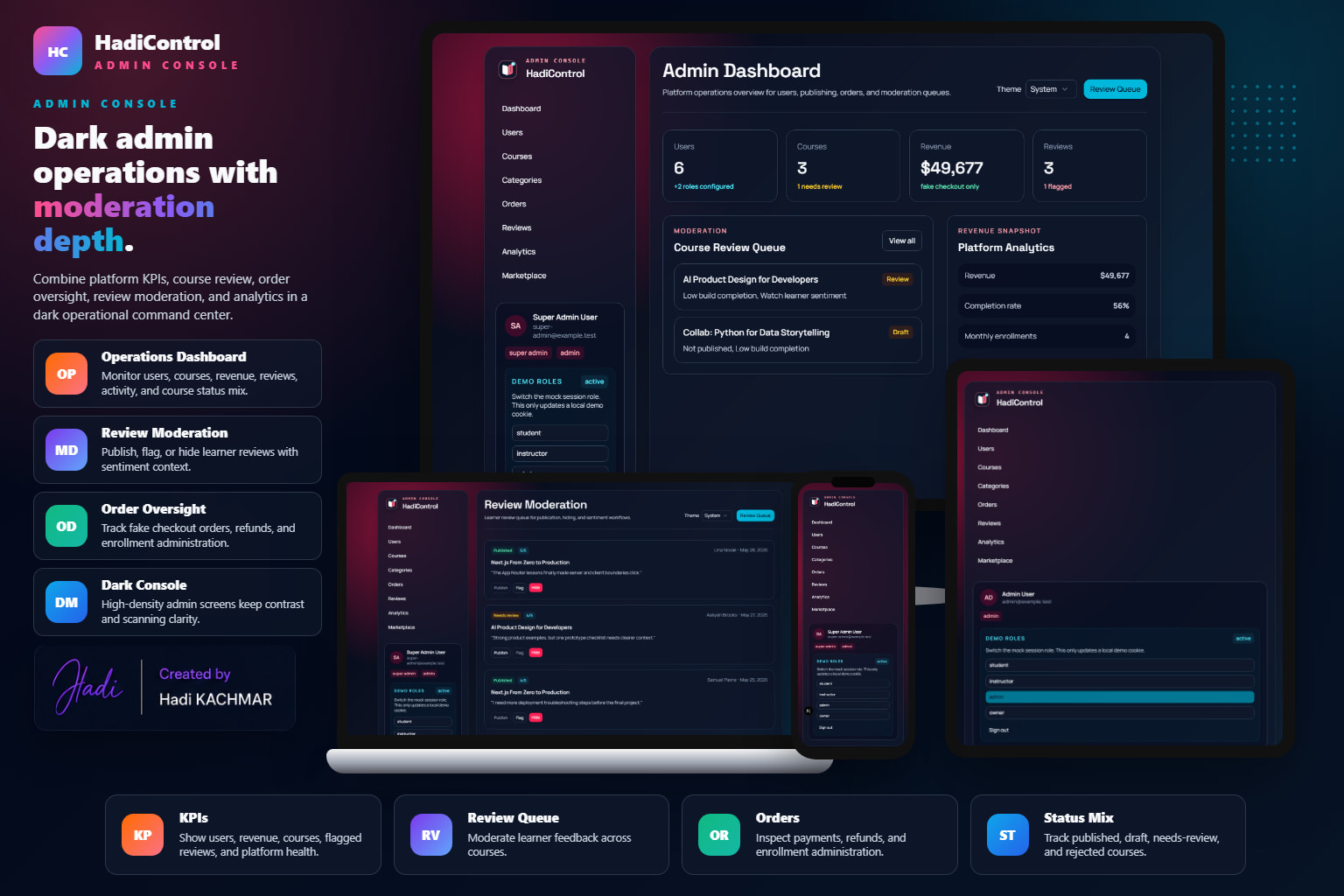
- Admin routes cover dashboard, users, course moderation, categories, orders/payments, reviews, and analytics.
- Auth and access infrastructure includes mock login, registration, role switching, role-aware navigation filtering, `requireRoles`, unauthorized fallback, loading, error, and not-found routes.
- The demo keeps the correct HadiLearn logo, page metadata, and base-path-aware links while being opened from the portfolio URL.
Marketplace
- Marketplace shell powers the public homepage, `/courses`, `/courses/[slug]`, `/categories`, `/categories/[slug]`, `/instructors`, and `/instructors/[instructorId]`.
- Course catalog supports search, category filters, level filters, published-course lookup, and slug normalization through the commerce/marketplace service layer.
- Course detail pages include syllabus context, wishlist actions, cart actions, pricing/enrollment entry, and instructor context.
- Instructor directory and instructor profile routes present expertise tags, catalog metrics, teaching snapshot, bio, and linked published courses.
- Local wishlist and cart pages let public visitors collect courses before checkout without requiring a production backend.
Learner Experience
- Student-only checkout and checkout-success routes create fake enrollments through server actions and short-lived cookies.
- Student dashboard summarizes learning progress, enrolled courses, and next learning actions.
- `/student/my-learning` lists enrolled courses from fake enrollment state.
- `/learn/[courseSlug]` provides a course player shell for enrolled courses.
- `/learn/[courseSlug]/lessons/[lessonId]` provides lesson playback with module navigation and cookie-backed completion actions.
- Certificates route scaffolds eligibility behavior and settings include local mock learning data reset.
Instructor And Studio
- Instructor dashboard reads studio course data and presents teaching performance, course status, and operational summaries.
- Course management includes course list, validated new-course Server Action, validated edit Server Action, and Zod-backed form rules.
- Curriculum builder supports mock lesson add, edit, delete, move, readiness, resource, quiz-planning, markdown, and image URL planning fields.
- Quiz planner route summarizes lesson quiz prompts for a course.
- Course analytics route scaffolds instructor-facing analytics for individual courses.
- Studio area includes `/studio`, `/reels`, `/articles`, `/articles/new`, and `/collaborators` for creator content and collaboration workflows.
Admin Operations
- Admin dashboard and `/admin/dashboard` provide platform overview entry points.
- User management scaffold covers platform user governance.
- Course moderation supports approve, request changes, and reject actions.
- Category management scaffold supports marketplace taxonomy operations.
- Fake order ledger supports refund and paid-status actions.
- Review moderation supports publish, flag, and hide actions, with analytics routes for platform-level reporting.
Technical Notes
- Next.js App Router uses route groups for marketing, student, instructor, studio, admin, and auth surfaces.
- Route-group layouts include metadata templates and shared shell boundaries.
- Server presenters, services, repositories, typed models, shared UI primitives, role-aware navigation, and `requireRoles` keep the app backend-ready.
- Tests cover auth permissions, protected helpers, navigation filtering, studio presenters, access fallback UI, role switcher UI, shared UI, commerce, learning, and instructor services.
- Runs as a real Next.js app behind the portfolio rewrite instead of being flattened into static files.
- Base-path-aware metadata, icons, and internal links keep the URL and logo correct inside the portfolio demo.